|
November 29, 2010 09:34:15
Posted By Peter W
|
I’ve made two stops on my way down to Daytona which have taught me a valuable lesson.
One was at Huntington Beach State Park in N. Carolina. I camped there cheaply, in spite of its excellent facilities. Being a State Park, there were also lots of great nature trails, a fascinating board-walk and miles of ocean beach. I enjoyed the few days I stayed there and felt truly close to the wilderness, in spite of the fact the Myrtle Beach was only about 10 miles north.
The second was a visit to Blue Spring State park in Florida. This park protects a spring that feeds the St. John River. The spring is always the same temperature, so it attracts manatee that are trying to escape the cold river water in the winter months. There are usually between dozens to hundreds in or around the park, so it is very common to see a large number of them. The park also does a two-hour boat ride up the river, narrated by a very knowledgeable captain. Again, there was no shortage of wildlife, with alligators and huge numbers of wild birds on display. We even surprised a feral pig.
The lesson learned is to not ignore the many State Parks which often get totally bypassed. A little research will definitely expose some real gems. These two parks will probably end up being the highlight of my road trip.
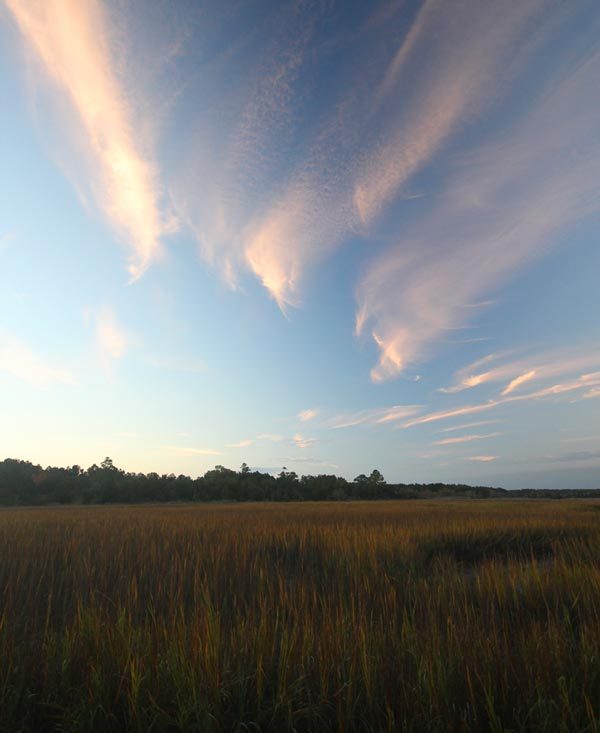
Here are a few pictures. I’ll be posting more (and perhaps have refined them a bit more) on the web site when I get back.



|
|
November 23, 2010 10:12:13
Posted By Peter W
|
I guess it's time to go out and take advantage of all the flexible time I've got after retirement. I haven't really written too much about the whole retirement thing, but the extra time I've had has allowed me to keep this blog much more up to date than it ever was previously. The time has been easy-going, perhaps a little too much so on occasion. No complaints.
So a road trip is just what I need now, to shake things up and provide some adventure. I'm heading south, with a few rough destinations. I realize that I'll be down in the States during the Thanksgiving weekend and Black Friday. That may be an adventure in itself. I'll try to work on some good photography so I can share some pictures here, like I did on the SW trip two summers ago. I'm taking Bertha (my trailer) and hopefully will have regular access to Internet so I can post my progress. I will probably be reaquaining myself with the Wal-Mart network.
Being out of any routine and doing a fair bit of driving always stimulates new thoughts for me, so who knows what may pop up here in the next week or so...
|
|
November 18, 2010 11:27:41
Posted By Peter W
|
I’ve been wading through Stephen Hawking’s new book, The Grand Design, for a few months now. It has been advertized as science responding to the question of whether God is necessary in order to explain the universe. That, however, turns out to be a very small part of it. The book was a delight to read because (he says with full modesty) I found so many ideas in it that have at one time or another rolled around this old noggin of mine.
In the first third of the book Hawkins put forth an idea that got me a “D” on a philosophy essay in university. He postulates that true reality is impossible to define. The best we can do in any situation is to create a model which attempts to describe reality. These models will always be more or less accurate, but more importantly, they will attempt to relate reality from a particular perspective or purpose. It goes back to one of my favourite saying, “The map is not the landscape.” No map can accurately represent a landscape, but each one can tell you something important an accurate, as far as it goes. A map showing you the topography of an area gives you accurate information, but doesn’t tell you anything about, say, the religious beliefs of the inhabitants. Any model that we create to describe reality works the same way. It may tell part of a story, but never all of it. (Please note that this is not an argument for Relativism. Maps can be inaccurate or can be insignificant. So can models for reality.) Understanding this about reality gives you two very important pieces of information. 1) Whatever model you are working with is incomplete. 2) Whatever model you are working with, there exist other models that might give you a perspective which is just as valuable.
This is a little heavy, but I really think that it is one of the most important things that people can learn. Conflicts ranging from broken relationships to world wars are based on different models of reality. Especially when it comes to religious issues, different ways of understanding the cosmos are at the heart of the conflict.
There are, it seems to me, two ways to supersede this. One is by understanding the big picture. This is why I like the work of Ken Wilber so much. His is a meta-model. A model that shows you how to navigate and evaluate models. The second way is to strip away the model and try to approach the essence. In effect, instead of looking at the maps, take a walk in the landscape. This, I believe, is a major benefit of meditation. Through meditation you begin to strip away facades, emotional baggage and over-analysis from your perceptions. That true reality is a mystery, but that doesn’t meant that you can’t approach it, like a calculus of perception.
In the second third of Hawking’s book, he proceeds to wow us with an overview of quantum physics, including his theories of multiple universes and why they mathematically have to exist. It’s heavy stuff, and I have to admit that he lost me a few times, but what I understood was utterly fascinating.
|
|
November 18, 2010 11:27:41
Posted By Peter W
|
And in the final third of the book, he addresses the God question. He begins by showing that if the physical laws of the universe were even a tiny bit different from what they actually are, life in the universe would be impossible. The universe seems tailor made for the emergence of life. Yes, you may be as confused as I was, since this seems like a pretty good argument for the existence of God in some form. But then he proceeds to bring out the multiple universes theory again, saying that our universe is just one of perhaps thousands or millions, and life emerged here because it just so happens that this is the one where it could. Perhaps (and likely) most or all of the other universes don’t contain life and the one I’m typing this in is randomly the one chance in a million that the laws of physics played out exactly the right way. It’s like saying that life on Earth is not special because there are billions of potential planets in the galaxy, and this is just the one that happened to have all the perfect conditions. Or, to put it another way, there is the old story about the infinite number of monkeys sitting at an infinite number of typewriters, and one of them randomly typing out one of Shakespeare’s plays.
The argument works, but I can’t say that I find it very powerful or compelling. First, it seems a bit drastic to invent a theory of multiple universes just to plug a loophole that might give theology some ammunition. Secondly, if we’re going to invent multiple universes to answer the question, “Why our universe?” then it just differs the question to, “Why multiple universes?”
It’s an effective argument against classical religious theology, -the idea of the old man with the beard sitting up in the clouds making decisions. But it’s not effective against other spiritual models. At best it weakly proves that God is not necessary, but it does not discount God. Einstein was a theist. He believed that there was a creative force in the universe that promoted complexity and evolution. The eastern discipline of Taoism says much the same thing, as does certain interpretations of Native American spiritualism. Certainly some of the ideas in Ken Wilber’s work on transcendental spirituality provides models of God which are completely different from those of the formal religions.
Finally, I was really tickled by the last chapter in the book where Hawkins resurrects “The Game of Life”. This is a computer program that I encountered back in my university days when I had an opportunity to attend lectures by Rudy Rucker, a noted scientist in the field of Chaos Theory. I’ve always thought this program contained highly valuable insight into the way that the universe works. The program shows how a simple set of rules result in order and stability. Patterns and order seem to emerge from random conditions. Order seems to be inherent in the universe. The slightest stimulus can set off a reaction that completely changes everything. And a large enough playing surface will produce lasting stability, while a smaller surface is subject to instability and inconsistency. I can’t begin to tell you all the ways in which these simple facts apply to and answer questions about our reality. It’s a pretty good model, and it would take a book on its own to fully explore.
|
|
October 3, 2010 01:28:49
Posted By Peter W
|
This all came back to me just after I posted the Nuit Blanche entry. (See below. This isn't it!)
Lyrics from my teenage years, which spoke vaguely to me then, now have a whole new meaning!!
Thank you Paul Simon.
Hello darkness, my old friend
I've come to talk with you again
Because a vision softly creeping
Left its seeds while I was sleeping
And the vision that was planted in my brain
Still remains
Within the sound of silence
In restless dreams I walked alone
Narrow streets of cobblestone
'Neath the halo of a street lamp
I turned my collar to the cold and damp
When my eyes were stabbed by the flash of a neon light
That split the night
And touched the sound of silence
And in the naked light I saw
Ten thousand people, maybe more
People talking without speaking
People hearing without listening
People writing songs that voices never share
And no one dared
Disturb the sound of silence
"Fools", said I, "You do not know
Silence like a cancer grows
Hear my words that I might teach you
Take my arms that I might reach you"
But my words, like silent raindrops fell
And echoed
In the wells of silence
And the people bowed and prayed
To the neon god they made
And the sign flashed out its warning
In the words that it was forming
And the sign said, "The words of the prophets are written on the subway walls
And tenement halls"
And whispered in the sounds of silence
|
|
October 3, 2010 11:11:50
Posted By Peter W
|
About 20 years ago I was camping in the States with one of my youth groups and had the opportunity to share an evening of conversation with other youth from cities in Texas, Florida and California. One of the things that came up was how amazed they were that our boys felt comfortable going downtown in Toronto on a Friday or Saturday night. They protested that they would never be able to feel safe doing that in their respective cities. Having visited a few of them myself, and notably San Francisco a few years ago, I can easily see why they felt that way. We were very wary and uncomfortable navigating our way just a block and a half from the only downtown shopping mall to where we were parked, sometimes crossing the street or taking detours to avoid loud groups.
In the past few weeks I've spent a lot of time in downtown Toronto. Often, as was the case last night, this has been in the dead of night. Now, admittedly, last night's Nuit Blanche was well attended by other people, providing a sense of security. But this says something in itself, -that upwards of a million people felt at home in this city even in the dead of night and the wee hours of the morning. This, however, was not the only time I'd been in the city so late. During my TIFF adventure, there were several occasions which saw me making my way to Union Station around midnight, never once fearing for my safety.
The last three months I have become more of an urban explorer that any time since I was a university student. What I've found is a vibrant, exciting and cultural city. Ethnic, food and cultural events have peppered the past months, with everything from Caribanna to TIFF to Buskerfest to Word on the Street, to Taste of the Danforth, to Nuit Blanche, -just to name the few. Unlike the American cities that surround us, -Buffalo, Detroit, Rochester-, the centre of our city is not dead and abandon. It is alive with a population which is heartily participatory.
For those willing to go out an find it, Toronto is definitely a world class city. (As such it has some world-class-city-problems, but they're minor compared to most other cities I've experienced.) When I visited Buskerfest in late August, I went down by cycling along Toronto's bike trail system from the Finch subway system, -a total distance of 34 kilometres. I know that when we cycled down, we only sampled a fraction of the cities routes, and spent very little time on actual roads. (This doesn't mean the bike lanes are unnecessary. They would be an excellent addition and compliment to these other existing recreational trails.)
Torontonians and those living in surrounding areas are luckier than many realize. The city is alive and successful, not strangle it by thinking of it purely as a functional organism where garbage is collected and streets are paved. Like a person, if you ignore the city's spirit and don't give it a purpose for being, no matter how well you feed and clothe it, the result will be hollow. A city's spirit needs to be nurtured or, like so many examples around us, it dies.
Two cities?? Well I have to give a thumbs up to the satellite community of Newmarket, where I've also spent a lot of time these past months. It has been careful in its planning to include a lot of green space throughout its development, and has a vibrant town centre of its own, Fairy Lake. Good planning creates healthy communities. But we must be ever vigilent that our politicians respect what's been accomplished and continue the work.
That, I believe, is what municipal elections are about.
|
|
October 3, 2010 11:11:50
Posted By Peter W
|
That being said, I have to give a thumbs down to last night's Nuit Blanche art extravaganza in downtown Toronto. For those not familiar with it, this is an evening where major Toronto streets are closed (Yonge, Bloor, Queen, Bay) from dusk to dawn for the installation of major art exhibits and projects. it is all billed as being very contemporary and interactive.
I want to commend the endeavour on its scale and organization. Having an evening of partying in the main streets of Toronto is very ambitious. As such, it was a great success. If anything, it seemed that the Frosh starved university students from U of T and Ryerson got their chance to cut loose in a big way. Frosh activities on campuses in Ontario have been curtailed this year, with many of the more extreme events being sidelined. I suppose that explained the thousands of drunk, loud and often vulgar people partying in the area of Yonge and Dundas, though I'm not sure that was the intended goal. I have to say that I've never heard so much loud public profanity in the street, on subway cars and buses... It seems that civil public behaviour is about as dead as dead can be. But I suppose that may be a topic for another entry...
Ya, so where was the art?? I was fully armed with maps and even the i-phone app (which was annoyingly unhelpful).
I started my evening around midnight at Nathan Philips square for the presentation by Daniel Lanois. This initial experience, was, unfortunately, the highlight of my evening. It was a 12 hour concert by Lanois accompanying film clips that were projected all over the square onto giant screens.
As I said, unfortunately it was downhill from there. I must have hit at least a dozen exhibits. Several were videos projected onto screens which were noteworthy in neither content nor quality. I think other things were supposed to be happening around them, but I didn't see anything and it would have had to be pretty spectacular to make up for the lacklustre videos. I spent 20 minutes in Ryerson Theatre watching what I think was a chess game being played on stage, waiting for the other multi-media extensions that were supposed to accompany this exhibit. Nothing. Eventually I left along with a lot of other confused people. The huge campfire in the middle of Dundas Square was ... a huge bonfire in the middle of Dundas Square. I suppose that it was a little odd to see this fire surrounded by people dressed as if they are in the backwoods, sitting in camp chairs, but are urban people really so unfamiliar with this that it counts as art??
(CONTINUED BELOW DUE TO LACK OF SPACE. ...STUPID BLOG PROGRAM...)
|
|
September 29, 2010 09:44:00
Posted By Peter W
|
I really don't t want this to turn into a blog about religion, but some of the juiciest stories lately have been religion related.
Yesterday a survey conducted by The Pew Forum on Religions and Public Life was released with some eye opening results. The study, conducted by a religious organization, presented a set of questions about Christianity and other religions to a large survey population of Americans. The survey and analysis look statistically sound and can be found here.
The results indicate that on average people with a Christian religious leaning have the least knowledge not only of religions in general, but also of their own Bible. Atheists, Agnostics, Jews and Mormons scored the highest overall, and proved to be more knowledgeable about the Bible and Christianity than all Christian groups except White Evangelists. Those same White Evangelist, though, scored near the bottom of the list when it came to questions involving any other religion except their own and even on questions involving the role of religion in public life (such as the teaching of religion in public schools). Fewer than half of those surveyed knew who Martin Luther was or could identify the four main Gospels of the Bible. Almost half believed that the Golden Rule was one of the Ten Commandments.
There are all kinds of conclusions which might be drawn from this, which are going to be contentious and controversial. One might look at the relationship between religious belief and intelligence. One might ask questions about "true believers" not really being informed in their beliefs. One might point to the importance of wide religious education being necessary in school systems in order to foster more understanding an fewer misconceptions.
Certainly this reflects on Christian zealots who criticize and pass judgement on other religious, when it seems that only a minority of them know what they're talking about.
Read the survey. It's American, but, like most survey information, it has relevance in Canada, if only to warn us what we need to avoid in our own cultural evolution. The stats are clearly presented and are broken down for quick analysis. I think it raises an awful lot of questions and issues, and probably has a lot of fundamentalist groups squirming a little.
(There are copies of the questions available on the web site (in an Appendix) if you want to test your own knowledge, but you should take it before reading the spoilers in the results.)
|
|
September 22, 2010 10:00:49
Posted By Peter W
|
Got a call yesterday from the Star (newspaper). It came at one of those inconvenient times, so I was annoyed with it, especially since I'm supposed to be on the "no call" list. When I mentioned that to the caller, she said that newspapers were exempt from the rule. I politely informed her that my policy is that people who bother me at home are exempt from my patronage, and that I would definitely be avoiding the Star now in the future. That's my standard reply, hoping that companies learn that bothering people at home actually has the opposite effect that they're hoping for. She just kind of chuckled and said that she'd remove my name from their call list. Sure. ...The way that Rogers has removed my name from their list, but still calls me about twice a month. What's the point of having a no call list if there are so many exemptions?
My other tactic has been to tell the caller that I'd be happy to listen to them if they would be kind enough to give me their own home telephone number. Obviously, they refuse, at which point I ask them why they think I'd want to be called at home when clearly they don't.
Ya, I know, it probably is futile, but only because more people don't do it. If there was a popular backlash to telemarketers, I'm sure they would reassess their effectiveness.
|
|
August 30, 2010 01:28:57
Posted By Peter W
|
I saw Anubis in my carpet this morning. It happens to me all the time. I'll be looking at some random texture or pattern and see images, particularly faces. Others have told me that the same happens to them.
I guessing that it has to do with our brain's need to impose order and interpretation onto reality. Our brain is always trying to make sense out of things, and will force interpretation when it can't. And so we see Anubis in the carpet or Jesus in the clouds, or some such things.
This tendency for our brain to impose meaning is a real flaw in human nature since there is no necessary commonality to the order that our brain likes to impose. What we experience is constantly being interpreted by our brains through a filter of past experiences, emotions, prejudices and ideologies. I often talk to someone, or watch two people talking, and realize that they are so far atuned from each other that they're talking about two different things and don't even know it. Sometimes I feel that it is a miracle that communication works as well as it does, as people are more likely to misunderstand each other than understand.
So, is this another arguement for relativistic nihilism? No I don't think so. Rather, I think that this points the way to greater understanding. The misuderstndings that plague communication arise from the filters through which we experience everything, -the emotional and conceptual baggage that we always carry around. The trick, then, is to strip away that baggage to reduce the impact of the filters. Is that possible, or is there no absolute truth or experience to find? Perhaps all truth is relative, mediated by finlters and interpretations. I don't think so. I think the goal of meditation and contemplation is to strip away the filters so that a more pure form of experience is available. I like to call it Immaculate Perception. As Lao Tsu says ``Knowledge is to add information while wisdom is to subtract it.``
Just as one can realize that the face in the carpet is a product of your immagination, so can we come to see how many of our perceptions are a function of our baggage. By understanding the trick and the true perspective, you come closer to seeing things as they really are. (While it may not be possible to see an absolute truth, that doesn't mean you can't have degrees of truth leading up to it.)
I`m just finishing up reading a great novel which illustrates this point superbly. "Horns" by Joe Hill, tells the story of a young man accused of his girlfriend`s murder. One morning he wakes up to find that he`s grown horns that force the people he meets to tell him the truth. Through a series of interactions and stories told from different perspectives, we slowly find out the real story behind the murder. We see the events through the presumptions of different characters, and realize that no events are explained simply. It is a very dark, gothic novel, much in the style of Neil Gaiman. Recommended.
With everyone having their own interpretations and investments in seeing things different ways, it`s a miracle that we understand each other at all.
|
|
|
|
